I have been a Lincoln resident since the age of 2. I grew up here, went to school here, and have lived in a few different areas of this town. When I was going through the hiring process with Sgt Jim Hawkins, I remember him asking my why I would make a good police officer for the City of Lincoln. ‘I’ve lived here my whole life’ I said, ‘I know the area, I know the people, I know how the city works.’ Boy was I naïve. Within my first week on the street with an FTO I found out just how uninformed I was about Lincoln. I soon was dealing with intoxicated transients, weekend hard partiers, and legions of petty criminals and police department frequent fliers. Not to mention the hardcore criminals who inhabit the city. Of course, growing up I knew those people and areas existed in this city, I just did not know the extent. I read the paper, I listened to the news, and I tried to keep up to date on most current events. Why did I not know about the issues that police officers were dealing with on a day to day basis?
I am still not sure I have the answer to that question. But I am sure that the majority of Lincoln citizens have no idea what is going on in this city. The print and broadcast media do not even scratch the surface in reporting the happenings. I am not a conspiracy theory kind of guy but I’ve often wondered if some of the crime stories are downplayed or not covered at all, simply in an attempt to keep Lincoln’s small town reputation in tact. Or maybe the news media is completely unaware as well. They rely on press briefings and interviews with the duty captains to find out the events of the day. Maybe the captains are not relating those details to the media. I think we as police officers are so used to hearing and dealing with these events that we have lost the ability to be shocked and we take them as ‘business as usual’. Of course I understand that on-going investigations and prosecutions cannot be talked about with any detail. I know there is not enough time or space to cover all the happenings in the paper or a 30 minute television broadcast. There is little wonder why there are so many lincolnites who make negative comments about LPD. They honestly think that all we do is sit in our cars and write speeding tickets, or stand out and direct traffic at Husker football games.
As a means of taking off the blinders, did you know that last year almost 70 police officers were assaulted? Or that so far this year over 30 officers have been assaulted? Did you know that LPD has investigated over 200 auto thefts so far this year? Are you aware that LPD SWAT gets called out about once a month and has been called out about 12 times this year? Did you even know LPD has a SWAT team? Has the media mentioned that LPD has investigated over 1100 narcotics offenses in the first half of 2008? Or talked about the 650 residential burglaries that Lincoln has experienced? Or the 150 non-residential burglaries through July? Is the average citizen informed of the 15 suicides or the 200 attempted suicides that LPD has investigated in 2008? Is John Q. Public aware of the Lincoln officers that have been commended this year for actions ranging from civic involvement, to outstanding investigations, to life saving efforts?
As a police officer I am aware of these stats, and I still think Lincoln is a great place to live and a safe place to raise a family. But now I am making that statement knowing the facts, and not just what I’ve heard or read in the news, or experienced in my own safe little neighborhood. Now I really do know this city.
Posted by Atticus at 3:14 PM 0 comments
Wednesday, August 13, 2008
Tuesday, August 12, 2008
LPD Training
A tangent presented itself from the last post; LPD training. The poster was asking about consistency in LPD Field Training evaluations (grading new recruits). Although I do not proclaim to be an expert in the field, I have been involved in LPD training on many different levels.
First off, LPD runs it's own basic academy which the State Academy in Grand Island oversees. There are certain basic topics that are covered, but since LPD has it's own academy there is leeway to cover LPD specific topics as well. I personally feel that we have tried to cover way too many topics in the basic academy. As it stands, the academy is 17 weeks long. Topics range from Nebraska Criminal Law to dealing with minority populations to firearms. You name it, it gets covered. After graduation, recruits then are placed in the Field Training Officer Program (FTO). This means that recruits ride with selected veteran officers for the next 6 months or so. The recruits spend approximately one month with an FTO and then move on to another FTO for another month and so on. The idea is that a recruit will see numerous different shifts and areas of town, as well as several different policing styles, based on the FTO's that they have been assigned to.
During the course of the FTO program, recruits are evaluated every day in 31 areas. These evaluations areas range from radio procedure to relationships with citizens to knowledge of laws and department procedure. The grading areas cover pretty much everything that a veteran officer must deal with on a day to day basis. Recruits are graded from 1-7, with 1 being unsatisfactory and 7 being superior. There are anchored behaviors included in the numerical score so that FTO's have a way of measuring each performance. The evaluation criteria are enumerated and well known to both FTO and recruit. Recruit Officers know what is required to achieve an acceptable score in each area. Recruit officers must be CONSISTENTLY acceptable in all areas before being released from the FTO program and allowed to be a solo officer. Generally this occurs after the 3rd or 4th month, but sometimes takes all 6 months of the program for the light to come on and for them to be acceptable. Unfortunately, sometimes the light never comes on. Starting about the 3rd month, there should be a gradual showing of acceptability which resumes until all 31 areas are acceptable.
If a recruit appears to be having problems or not progressing, there are many different avenues that are pursued by the training staff to give the recruit the opportunity to improve. There is remedial training, shifting to a different FTO, extra studying, etc. When a recruit is having a problem, it is not a secret to the recruit. They are aware of the deficiency and the efforts being made to effect that deficiency. The whole goal is to get that recruit up to an acceptable level. We do not try to 'wash' the recruit out. Every available option is explored in order to make sure the recruit has the best chance to make it through the program.
However, at some point a decision has to be made on whether that recruit passes the program or fails the program. To a certain degree I think that LPD has made so many efforts to come to a successful conclusion, that we occasionally lower the bar for the recruit rather than insisting that the recruit rises to our standard. In the end though, there are some recruits who do not pass and they are either dismissed, or they see the writing on the wall and they resign. Most of the time resignation is the option. I have personally had several recruits of mine resign and in the end they have thanked me for the efforts that I made to help them. They leave the department with grace and dignity and have determined that LPD is not for them.
Along those lines I will say this: Being a police officer is not for everyone. Particularly a Lincoln Police Officer. Our standards are high. We do the job differently than most other departments. This has been addressed in the past in the traditionalist vs. generalist officer description. Many of my past recruits are great people, they simply were not cut out for this job. If I were trying for a sales job I think my trainers would quickly come to the conclusion that I am not cut out for that type of work. Nothing more nothing less. And yes, some of the recruits who have not made it through our program have gone on to careers in other departments. I would attribute that to simply being a better fit in that particular organization.
Of course I have also seen recruits that have no business being police officers anywhere. But those are the exception. Generally those people have been weeded out in the testing and application procedure. Occasionally some slip through and that is only identified once the FTO program is begun.
As mentioned in a previous post, FTO's are selected and trained before being assigned a recruit. The issue of consistency is stressed through out the training and the monthly FTO meetings that take place while recruits are in the program. Generally speaking, if a recruit does not make it through the program, FTO evaluation consistency is not the issue. One FTO does not determine the fate of one recruit. Several months of evaluations done by several FTO's are examined by the FTO coordinator to insure that the recruit has had every chance to make it to an acceptable level. Admittedly, there is inconsistency among the styles of the FTO's, but there is NO inconsistency on what performance is acceptable, and what is not.
The LPD training program is difficult. You have to be on your 'A' game to get through the program. Do a few duds make it through occasionally? Yes. But those are very few and very far between. I would suggest that if anyone is interested in seeing what it takes to become an LPD officer, enroll in the citizens academy. The Citizens Academy is a shortened version of the LPD basic academy and it illustrates the areas of study that one must pass through to become a Lincoln Police Officer.
Monday, August 11, 2008
Why we Do this
I am a cop. I suppose some of the posts I have made in the past make that fact fairly obvious. I am proud to be a cop. It is a profession that I decided early on to pursue. I guess since I was in junior high (now called middle school) I have always wanted to be a cop. Now that I have achieved that goal, I cannot imagine doing anything else. It is the best job in the world. Being a cop is like an E-ticket at Disneyland (it’s been a while, I don’t know if Disneyland even has e-ticket rides anymore). I get a front row seat to some of life’s most exciting events. On the downside, I also get to see some of life’s most disheartening events. This job has provided me with some of the best moments in my life; and also some of the worst. Still, I wouldn’t change my career choice for anything. Because of that, I do not like to hear some of the negative comments made by, and towards my fellow cops. Oh, I guess the negatives that are heard from some citizens are to be expected. Many of them are made based on a lack of understanding of the job. Many are based on negative contacts they have encountered with a cop. And, regrettably, some are based on instances where cops have made mistakes or acted inappropriately.
But the negative comments heard by fellow cops are the ones that sting the most. Not because I always disagree with the comments; many are spot on. They sting because I think they reflect poorly on Police Officers as a whole. By nature we are thick skinned. We are often ripped up one side and down the other by an unhappy violator, yet we resist the opportunity to respond in kind. Our character and actions are often called into question while on the stand, yet we respond with professionalism and a certain amount of detachment to the attack. Why is it then that in the Chief’s blog and other venues, many negative comments are posted in reply by someone who is obviously a cop? You know the ones. The ones where an officer is complaining about having to take the time to remove a dating.com sign from the right of way. Or miffed because they were called on a child neglect regarding kids climbing a tree unsupervised. Or having to spend hours investigating the feces filled candelabra left on a front porch.
The response from some citizens is ‘That’s what you are paid for’, or ‘I pay your salary’, or ‘You shouldn’t be a cop if you don’t want to do those things’.
Well, for those people I have a response: When I was in junior high thinking about becoming a cop, I did not envision saving the world by removing signs from the right of way. I did not think I was going to make a difference by acting as parent for someone else’s children. I was not thinking of saving humanity from invading hoards throwing flaming poop bombs. I really did want to make a difference. I wanted to save the city from murderers, robbers, and thieves. I wanted to protect the poor and defend the weak. I wanted to help create peace out of chaos. I wanted to be a positive role model in a young person’s life, just like SRO Stacey was for me when I was a kid.
The truth is I have had some encounters that have fulfilled those dreams. I have helped people in need and I have protected some from harm. I have helped make peace in some chaotic incidents. Many days I have ended my shift feeling as if I did make a difference. But in reality, those instances are the exception, not the rule. A good deal of time is put into taking belated reports of fairly minor incidents, or handling the truly mundane calls that are sent out to me via the radio. I frequently act as babysitter or referee to both youth, and adults.
So to the citizens I would say this: I will handle your call no matter how minor. I will do it to the best of my ability and will try to uphold the honor of the badge I wear. But if I feel somewhat less than satisfied, and that occasionally comes out as a complaint in a blog, please understand that those complaints are from frustration, not laziness or a lack of concern. It is hard to gear myself down to pulling a sign from a right of way, when I have been trained and have prepared to save lives and protect those who need protection.
To the officers I would say this: This is the job we have chosen and we must take the good with the bad and the satisfying with the unsatisfying. Most calls we respond to will not be the kind of calls that we envisioned ourselves doing when we applied for the job, but that call may still positively effect someone beyond what we perceive. And the call that forever affects your life or the life of someone else, may be the next call dispatched to you.
Saturday, August 9, 2008
King for a Day
The Chief has graciously allowed me to take over his blog for the next week. To my knowledge, he has no idea to whom he has relinquished control. Of course, as you will see over the course of the next few blogs, I do not have the computer skills or techno-geekness that he possesses, so it's possible that he may have some way of determining my true identity. I kind of doubt he knows now though. Don't repeat this... but I am fairly sure that if he knew who Atticus was, he wouldn't have been so willing to turn the reigns over to me. Let's just say I don't think I've ever been on his short list of 'favorites'. Heck, probably not even on his long list. Anyway, here I am.
A response to the Chief's last entry before he headed off on vacation asked if Atticus would be approved to make some changes at LPD in his absence. Sadly, no. It is one thing to turn over control of your blog, but quite another to turn over control of your entire department. But that did start me to thinking on what changes I would make if I was crowned LPD King for a day. (Que the dreamlike harp music)
Sure I could start with the 1.5 officers per 1,000 citizens, but that one has been done to death. Do you get the feeling the Chief could insert that lofty goal into just about any conversation? I do. I am glad he does and maybe eventually the squeeky wheel will get the grease. For my day though I will leave that up to him.
I suppose I could make some changes on the type of calls LPD will and will not respond to. Clearly we are the clearing house of the city and some of the calls we are sent to border on the ridiculous.
Or I could magically decree that I would determine who is and who is not a 'criminal', based on each citizen's personal description, and protect the true victims in the city. After all, if you read some of the blogs following the newspaper articles there are many among us who feel LPD should have crystal ball powers and be able to make these determinations regardless of facts, witnesses, individual rights, etc.
Naw, I think if I were King I would go for a real change. Something crucial. Something far-reaching. Uniforms! I think it is high time we moved out of the 70's era polyester/wool pants and comfort matching french blue shirts. Seriously, I know outfitting an entire department is costly but we don't have to do it all at once. We can do it a little at a time. Start with the new recruits. When a veteran's uniform needs to be replaced due to wear or weight gain, change it out with the new threads. Surely that would help the cost issue a little.
There is no doubt that the current uniform pants wear like iron and can take a beating. Unfortunately they actually do wear like iron! They are not meant for sitting. In a cruiser or behind a desk, they feel like a medieval torture device. They ride up, they bind, they are itchy. And, after all these years I still cannot decide what size I wear. If I get them a little big, they wind up looking like clown pants. If I get them a little smaller they look like I had to pry myself into them. Unlike Mark Fluitt, I do not have the body of an Abercrombie and Fitch model. Few of us do. I'd like a little room in my pants, without looking like I should be entertaining the crowd at a bull riding event. And by the way, this is Nebraska. It gets a touch warm in the summer. Ah, there's nothing like the feel of sweat rolling down the inside of your thigh while working a fender bender.
The shirts are a bit more comfortable but only a shade. And speaking of shade, I am pretty sure the french blue needs an overhaul. I kind of like the darker shirts. Helps to eliminate the underarm stain problem following the above described accident investigation. Of course the darker color attracts the heat, but with today's fabrics, I bet there is an answer out there. Maybe an officer in Florida or Texas or California could provide some input. I hear it gets a little warm in those areas as well.
I am well aware that the Chief does not want the BDU pants and paramilitary style uniforms that some have suggested. At this point I think there are a variety of uniform options out there and we should be able to come up with something that is comfortable, yet has the professional look the Chief is after.
This is a job in which one minute you could be running through alleys, up & down stairs, over fences; and the next minute you are expected to sit in on a neighborhood meeting or testify in court. We need uniforms that match that diversity in comfort, style, and price. We need a change.
If only I was the King.
Thursday, August 7, 2008
Guest blogger
I'm on vacation for the next week. Earlier this summer, I asked a reader of The Chief's Corner to fill in in my absence. Atticus (no, I have no idea who he is) has contributed some particuarly lucid comments from time to time, and I like his writing style. I thought he would be a good sub, and he agreed. I told him how to get an anonymous gmail account, and I added him to my profile as an author.
We are celebrating a big wedding anniversary next week, so Tonja and I are headed out for our first genuine vacation in several years. I'll be back on the blog a week from Monday.
Good blogging, Atticus, and thanks!
We are celebrating a big wedding anniversary next week, so Tonja and I are headed out for our first genuine vacation in several years. I'll be back on the blog a week from Monday.
Good blogging, Atticus, and thanks!
Wednesday, August 6, 2008
Occasionally asked
Here's the situation: people have heard about a crime in the local news media. The stories identify a suspect, and at least part of the evidence connecting him or her to the crime. Some people can't figure out why the police haven't arrested the suspect. I am occasionally asked about the cause of what seems to be a delay in arresting a suspect when the evidence looks conclusive to the general public. Here are the some of the more common potential causes that come to mind:
- The case needs more work. We haven't quite established probable cause, or we'd like to gather some more evidence to bolster the case first, even though probable cause already exists. Lab results an take a good long while, as can certain kinds of financial records and analysis. Sometimes it is better to tie up these loose end before the arrest is made, even if you've already got enough evidence to reach the probable cause threshold. Probable cause won't convict--that requires proof beyond a reasonable doubt. Obviously, you don't just want to arrest the defendant, you'd like to see him convicted.
- It's a matter of timing. You may want to stage things in a particular order. This can sometimes help things develop. The arrest of one subject may cause an inculpatory reaction by another, for example. Occasionally, suspects are in a rush to get their story in before somebody else, and it may be advantageous to let them jawbone away to their heart's content for a while. People, especially suspects, are sometimes more helpful when nobody is in jail. Sometimes suspects continue to do things that provide more and more evidence--like clumsily try to cover their tracks, arrange alibis, confide in other people who will later become witnesses, and so forth. Waiting and watching can be quite productive in some circumstances.
- The suspect is hospitalized. When you are arrested, the taxpayers become responsible for the cost of your care--even if you are perfectly able to pay, and even if your injury or illness is your own dumb fault. Arrest a drunk driver who injured himself in a traffic crash, and the taxpayers foot the bill. This can be tens of thousands of dollars. Why not wait until later to effect the arrest after he or she has been released?
- The suspect committed a traffic infraction causing an injury crash. If the injury is serious, we may not issue a citation right away, because we want to see how the victim is doing. Because traffic tickets can be easily disposed of with a waiver, special caution is needed. If we were to give the violator a ticket for something like failure to yield the right of way, and he or she simply pled guilty by waiver and paid a fine, it would be impossible to prosecute for misdemeanor motor vehicle homicide later, in the event to the victim's death. Double jeopardy is prohibited by the fifth Amendment to the United States Constitution.
Every case is different, and in protracted investigations, we generally are looking at the pros and cons in deciding when the time is right. This is often done in consultation with the prosecutor. If the defendant is not an escape risk, is unlikely to flee the jurisdiction, and unlikely to commit additional crimes that present a risk to others, then time is on our side and we can make the arrest on our own terms. In other cases,we have to act as quickly as possible once probable cause has been established. Public safety is the primary consideration.
Tuesday, August 5, 2008
The elusive "Why?"
Why has crime fallen so precipitously in Lincoln during the first half of 2008? Or better yet, why has it fallen so significantly during the past 20 years? The short answer: we don't know. The long answer is that theories abound. Barrels of ink (or rather, cases of toner) have been devoted to this issue in academia. Crime, like much of human behavior, is such a complex phenomenon that it is exceedingly difficult to dissect the various causative factors. This doesn't stop people from trying, though, including me.
Factors impacting crime in the United States:
The decline in crime over the past 20 years is a national phenomenon in the United States. We're part of that. Despite an uptick in violent crime during 2005 and 2006 (scroll down on this page for the graph), crime fell significantly since the late 1980's throughout the land.
Researchers have speculated about all sorts of causes: changing demographics, the cooling of the crack epidemic, gun control, abortion, rising prosperity, increasing numbers of police officers per capita, rising prison populations, concealed handguns, and improvements in police strategies have all been theorized as causative agents. This controversial article by Steven D. Levitt is a nice summary of the theories and review of the evidence.
Factors nobody seems to talk about:
There is a factor that I think may have contributed to the decrease that you just never see mentioned in the research literature: cell phones. Remember the first cell phone you saw back in the late 1980s--heavy, expensive, and tethered to a battery the size of a Die Hard? During the next 20 years, cell phone use exploded. Now everyone has one, and it's definitely had an impact on policing. Julie Righter, who manages the City's Emergency Communications Center, puts it like this: "We used to get a phone call on a traffic accident, now we get 10 phone calls." I think it's just plain harder to get away with many of the kinds of crime that comprise the Part 1 offenses--especially burglary, auto theft, many kinds of larceny and robbery.
To a lesser extent, the rapidly-expanding number of video surveillance systems, alarm systems, and anti-theft technology may have helped, too. When I was a street sergeant in the early 1980's, I fancied myself as something of an expert on an event we knew as the KLIV. I could get into about any car around with a clothes hanger and a pair of pliers in less than two minutes (okay, maybe a little longer for those Toyotas, Hondas, and Datsuns). Can't do that anymore. Car alarms were pretty much unheard of, not to mention radios that disable themselves, keys with embedded computer chips, and so forth. The digital footprints people leave has changed criminal investigations.
Factors that may be specific to Lincoln:
This one is hard to ignore. The number of arrests by Lincoln police officers is vastly outstripping population growth. It jumped another 1,000 in 2007. As jaded as I am about plea bargaining, pre-trial diversion, probation, intensive supervision probation with electronic monitoring, good time, early parole, and so forth, the increasing number of arrests can't help but help. When offenders are under some kind of correctional control, it at least slows them down.
You also can't ignore some of the reporting changes we have made that have artificially reduced the reported crime rate. Chief among these is larcenies from self-service gas pumps, a change made in the summer of 2007. At the end of the year, you can add about 500 larceny-thefts for 2008 to adjust for that. Despite that blip in the current year, the decline is still large, and the trend is still the same.
A major factor specific to Lincoln in my view is the improved ability of Lincoln police to manage information, and to both conduct investigations and formulate problem-oriented strategies based on knowledge. Do not confuse information with technology. LPD's information was excellent when I arrived, a decade before Bill Gates. We had great information about people, events, and trends. It took considerable time and effort to get it, though: stand in line at the Records counter, read 3x5 cards, pull the paper reports, read more cards, and so forth. Technology implemented in 1980 matured in the 1990's and beyond, and allowed us to gather information much more rapidly, consistently, and thoroughly. Research that would have required hours at HQ can now be completed in minutes from about anywhere with an Internet connection. We can alert you about a trend or pattern before anyone has recognized it.
Although we are not alone in possessing good information, we are different from many departments, where, despite good information systems, the access to that information is still sneaker net: go to Records, go to Crime Analysis, get someone to look it up for you, hope that the Gang Unit isn't away at a training session in Denver, etc. etc.. Here, we are primarily in a serve-yourself environment where every single officer is something of an analyst herself or himself. You get help with the complex stuff that is beyond your capability, but most of what you need is easily accessible 24/7/365.
Armed with excellent information and intelligence, we've also gotten progressively better about knowing what to do with it. We think about "what works," engage in strategies that go beyond just taking the next report, and problem solving is part of our organizational culture.
Why it may seem crime is up, when it's really down:
If you want to see me get trashed in the online comments, just read an article in the local newspaper where I mention that the crime rate is falling. I am either in denial, ignorant, or cooking the books. Come to think of it, you can pick all of the above. What's with that? The math-phobic are unswayed by facts containing a numerical component.
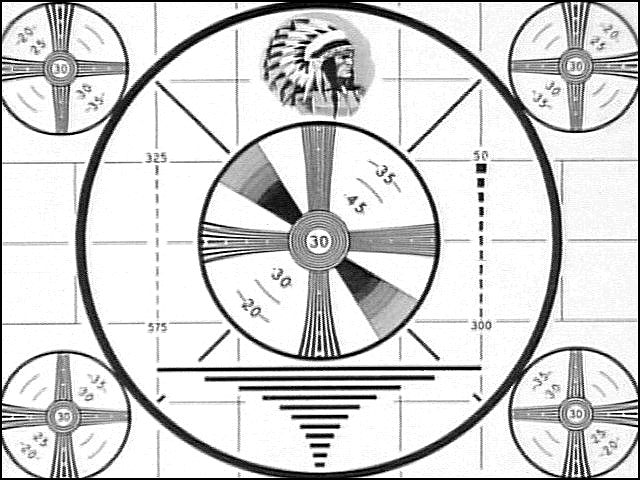
Twenty years ago, the daily news media briefing and LPDHQ was attended by Margaret Reist from the Lincoln Journal and Bruce Weible, from the Lincoln Star. That was the extent of the police beat. Today, KFOR, KLIN, KETV, KOLN-KGIN, KLKN and the Daily Nebraskan have all joined the Journal Star. Others (like KPTM, KMTV, and the Omaha World Herald) call when they hear about something interesting. The news competition is much greater, the news beat never rests, and the newspapers' online editions have become more and more like a radio station--with regular updates. If you're 25 years old, you have no idea what the test pattern looks like. I am sometimes amazed at the ability of television to create dramatic-sounding teasers promoting the evening newscast out of thin air.
The second factor is the eyes of the beholder. Those who find it hard to believe that crime is actually down significantly are probably in their mid 30's and beyond. You get older, and the world is going to heck in a hand basket. Those police blotter articles are all the proof you need. Kids nowadays.... I have a feeling if you polled young people, their perceptions about crime trends and community safety would be quite a bit different. They haven't been around long enough to get good and cynical yet.
Saturday, August 2, 2008
Longer view
Thursday's release of the crime statistics for Lincoln in the first six months of 2008 was a bit startling. A 19.4% drop in Part 1 offenses gets some attention. Even adjusting for the reporting change we made last summer, the drop is still an impressive 13.4%. Reporter Lori Pilger's article in the Lincoln Journal Star is pretty comprehensive, and there's not much more I need to add to what I said yesterday. There are some comments following Thursday's post concerning POP projects that address what I'm most concerned about--robberies--but other than that, the data is cause for a minor celebration, and some head scratching about causes, something I'll cover down the road.
I am always leery about taking too much away from short-term statistics, particularly when the numbers are small--as they are in certain types of crime. The longer the timeline, the more likely the "trend" is not a "blip." One of the handouts I took to the Mayor's news conference concerned that trend, but didn't make it into the stories I read or saw. Here it is (click to enlarge):
I am always leery about taking too much away from short-term statistics, particularly when the numbers are small--as they are in certain types of crime. The longer the timeline, the more likely the "trend" is not a "blip." One of the handouts I took to the Mayor's news conference concerned that trend, but didn't make it into the stories I read or saw. Here it is (click to enlarge):

Now that is an irrefutable trend. I picked 1991 as the starting year, because that is when crime peaked in Lincoln. In reality the trend goes back even further. I've got easy access to crime data back to 1985 (you do to--our annual reports).
I know this is counterintuitive and difficult to believe, but I can't help that. The facts are facts: There were fewer FBI Part 1 Crimes in Lincoln in 2007 than there were in 1988. Not fewer per capita, just plain fewer: 13,063 vs. 13,190. Lincoln's population in 1988 was 187,890, about 63,000 less than today. And Part 1 Crime is in a free-fall so far this year. When you adjust for population, and express crime as the rate per 1,000 residents, the drop is dramatic over the past 20 years. It has, however, been a drop in property crime: the violent crime rate has remained relatively stable. Since the FBI Part 1 offenses are dominated by property crime, a small change there overwhelms a large change in violent crime. Here's the way 2007's Part 1 offenses shake out by type (click to enlarge):

You can roll your own statistics on our public web site, with a slick application that lets you pick crimes types and time periods back to 1990, or you can find our annual reports on line from 1985 to 2007.
Subscribe to:
Posts (Atom)